Cloud
Starlink on Alaska and T-Mobile: Why Free In-Flight Wi-Fi from Seattle to San Jose Feels Like the Future
Starlink-powered in-flight connectivity is changing what passengers expect from airlines, especially on business-heavy routes like Seattle to San Jose. Here is why free Wi-Fi, live flight maps, messaging, and secure browsing should become the new airline and cruise standard.
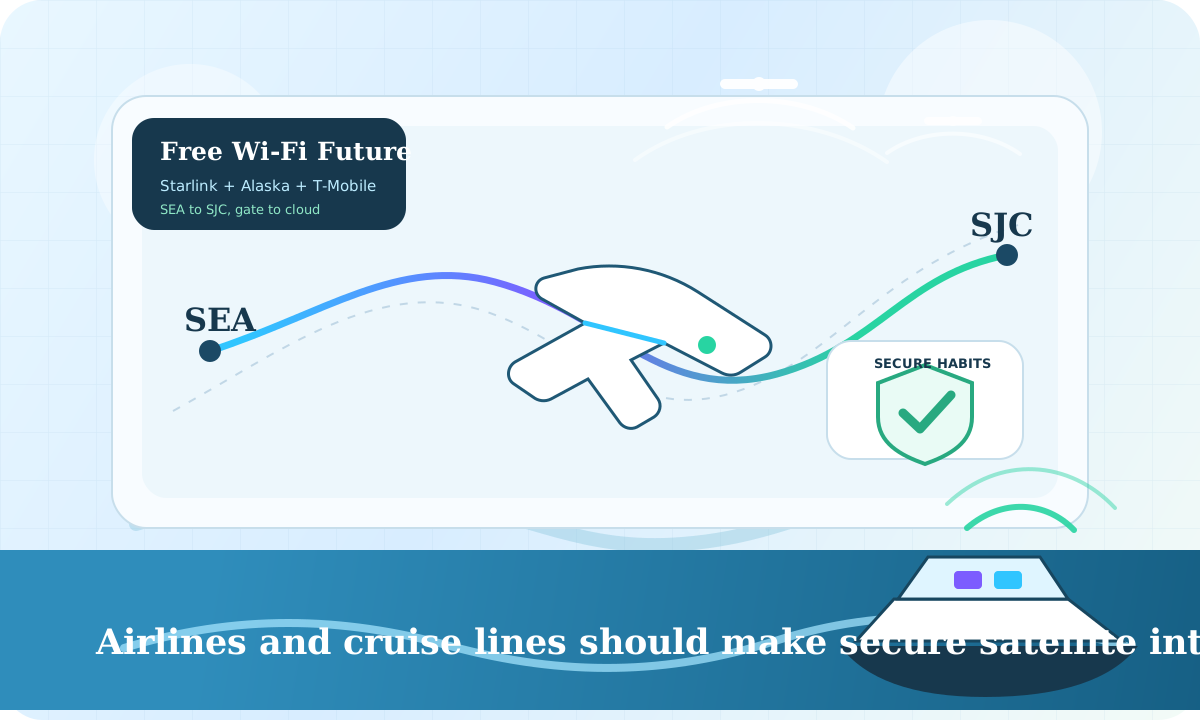
A short flight from Seattle to San Jose should not feel like a dead zone anymore. For years, in-flight Wi-Fi was something passengers tolerated: slow login pages, unstable sessions, paywalls, and the quiet assumption that real work would resume after landing. Starlink changes that expectation. On routes like SEA to SJC, where the passenger mix often includes founders, engineers, security leaders, students, and cloud teams, free high-speed connectivity is not a luxury. It is becoming part of the product.
Alaska Airlines has announced plans to roll out Starlink across its fleet, with free access positioned around its loyalty experience. T-Mobile's satellite story adds another important ingredient: passengers increasingly expect their phone, airline account, and satellite-backed connectivity to work together when terrestrial coverage disappears. Even when the specific product details differ by aircraft, plan, loyalty membership, route, and rollout phase, the direction is clear. Connectivity is moving from paid add-on to default travel infrastructure.
The passenger experience is the easiest part to love. A Starlink-connected flight can make messaging feel normal, let a traveler keep an eye on a live route map, check where the aircraft is over Oregon or Northern California, coordinate pickup timing, work in cloud apps, read security news, and arrive without feeling digitally stranded. The live GPS-style map is more than entertainment. It gives passengers context: where they are, how long remains, what weather or terrain they are crossing, and why arrival estimates are changing.
For airlines, the marketing upside is obvious. Free, reliable Wi-Fi is memorable. Passengers talk about it. Business travelers choose around it. Families appreciate it. Loyalty programs get another reason to matter. Alaska already has a strong West Coast identity, and a route like Seattle to San Jose is exactly where fast satellite connectivity can turn a routine hop into a small brand moment: work starts in Seattle, continues above the clouds, and lands in Silicon Valley without breaking flow.
The same logic applies to cruise lines. Cruise passengers spend days at sea, often far away from cellular coverage. Starlink-class maritime connectivity can improve guest satisfaction, remote work, emergency communication, crew operations, point-of-sale systems, entertainment, and family check-ins. Airlines and cruise companies should treat modern satellite connectivity the way hotels eventually treated Wi-Fi: not a premium novelty, but part of the baseline promise.
Security is where the story needs to be honest. Starlink itself is not the same thing as an unsecured coffee-shop router, and low Earth orbit satellite networking can provide a modern, high-performance path to the internet. But passengers should still treat any shared travel network as public Wi-Fi. That means using HTTPS websites, keeping device updates current, avoiding unknown device-sharing prompts, disabling unnecessary AirDrop or file sharing, using a reputable VPN when company policy requires it, and never approving surprise MFA prompts just because they happen while traveling.
For companies, the security policy should be simple: allow travel connectivity, but wrap it in strong endpoint controls. Managed devices should enforce disk encryption, phishing-resistant MFA where possible, secure DNS, EDR, browser protections, certificate hygiene, automatic updates, and conditional access. Sensitive admin work should be routed through trusted corporate access paths. The answer is not to block employees from using in-flight internet. The answer is to make secure work possible from anywhere, including seat 14A.
There is also a privacy dimension. Live flight maps and route displays are usually about aircraft position, not personal identity. Still, travelers should think carefully before posting boarding passes, seat numbers, live locations, or screenshots that reveal calendar items, customer names, or internal dashboards. The network may be excellent, but social sharing can still leak more than the network ever would.
From a performance standpoint, Starlink's low Earth orbit architecture is why the experience feels different. Traditional geostationary satellite systems route traffic through satellites much farther from Earth, which adds latency. Starlink's lower orbit can reduce that delay and make interactive work, messaging, browsing, and app refreshes feel more natural. Independent measurement work has reported strong in-flight throughput in real-world tests, though performance can still vary by aircraft, region, ground-station routing, congestion, and flight phase.
The best version of this future is not just faster Wi-Fi. It is connected travel that respects safety, privacy, security, and passenger delight at the same time. Imagine every Alaska route with simple free access, every cruise cabin with reliable service at sea, every live map paired with useful travel context, and every enterprise device already prepared to work safely on public networks. That is the practical promise of Starlink in aviation and maritime travel.
HackWednesday's take is optimistic: Starlink-powered connectivity should become a standard feature across airlines and cruise lines. Alaska, T-Mobile, and Starlink are helping normalize the idea that passengers should not have to disappear from the internet just because they are moving through the sky or across the ocean. The security model is not magic, but it is manageable. With modern endpoint controls and basic traveler hygiene, free high-speed satellite internet can be both delightful and responsible.
For SEO-minded travel brands, the message writes itself: free in-flight Wi-Fi, Starlink on Alaska Airlines, T-Mobile satellite connectivity, Seattle to San Jose productivity, secure airline Wi-Fi, live flight map, cruise ship internet, and low-latency satellite broadband are all becoming part of how customers search, compare, and choose. The winners will be the carriers that make the experience fast, free, clear, and secure by default.
Source notes
Every Wednesday post should link back to primary reporting or documentation so readers can verify claims quickly.